Why Modularity
Why Modularity
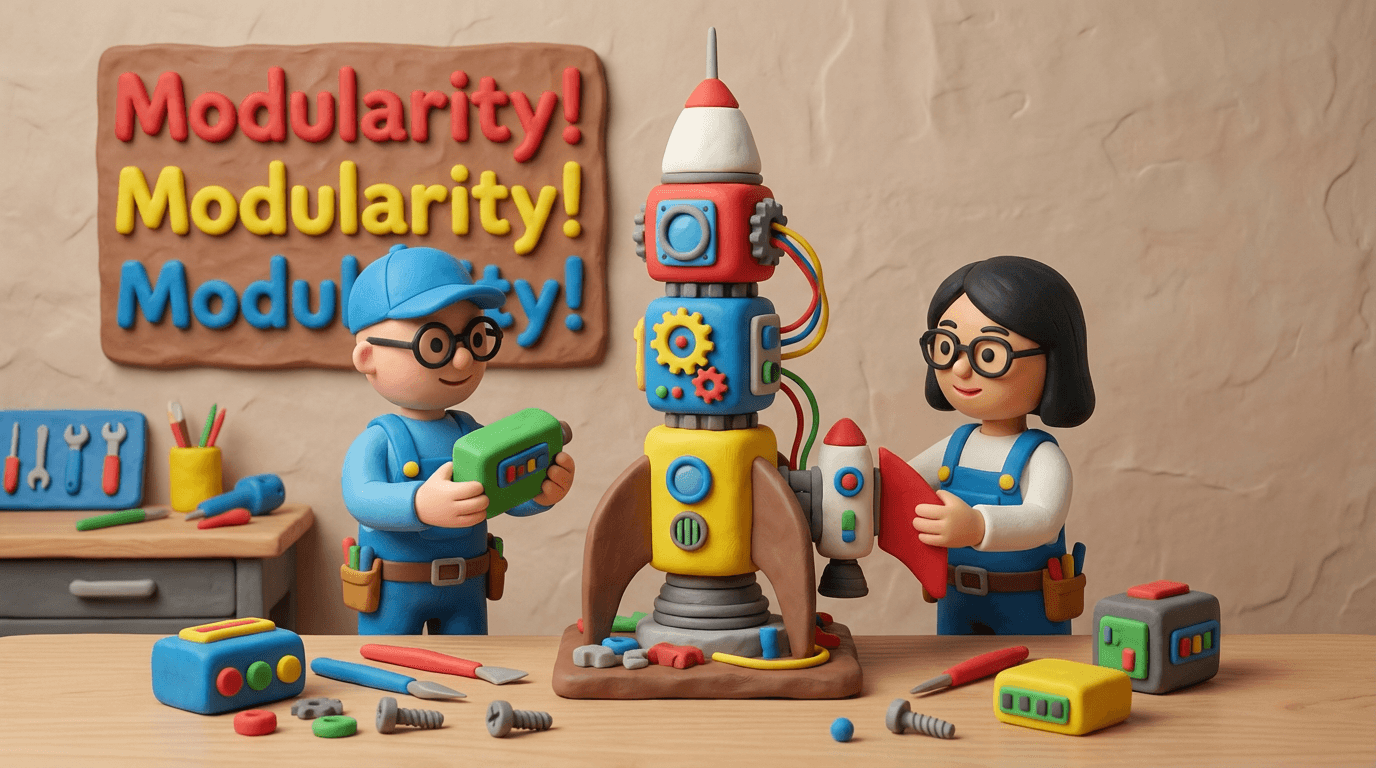
At its essence, modularity represents one of the most fundamental principles governing the successful design and implementation of complex systems. Whether we examine the architecture of a cathedral, the organization of a biological organism, or the structure of software itself, we find that truly robust and maintainable systems are built from well-defined, semi-independent parts that work together through clear interfaces.
Modularity as a Mechanism of Control
Yet modularity is more than just a design principle—it is a mechanism of control. Once the modular architecture of a software system is properly specified and understood, its implementation follows as a matter of logic. The interfaces between modules, the responsibilities of each component, the data flows and dependencies—these architectural decisions constrain and determine what the implementation must be. This insight transforms how we think about software development: to control the development process, we need only control the modular architecture itself.
Profound Implications for Development
This has profound implications. When architectural modularity is rigorously specified, the actual work of writing code becomes a translation problem rather than a creative act fraught with ambiguity. Each module's contract defines what it must do; its interfaces define how it must interact; its position in the architecture defines its dependencies. The logic of implementation flows from these specifications.
This creates a natural division of labor between human judgment and machine capability: humans control the modular architecture—making the critical decisions about system boundaries, component responsibilities, and interaction patterns—while machines handle the implementation details that follow from these architectural constraints.
Multiple Levels of Modularity
In software engineering, modularity operates at multiple interconnected levels, each reinforcing this control mechanism:
- At the most granular level, we have reusable components—individual functions, classes, and modules that encapsulate specific functionality
- These components aggregate into systems and subsystems, each responsible for distinct domains of concern, communicating through well-defined contracts rather than tangled dependencies
- Common design patterns provide proven templates for solving recurring problems, creating a shared vocabulary that allows teams to reason about complex architectures
- Testing standards ensure that each module can be verified independently, with its compliance to specification measurable and enforceable
By specifying modularity at these various levels—component interfaces, system boundaries, design patterns, testing protocols—we establish a complete architectural blueprint. The development process then becomes an exercise in realizing this blueprint, with each piece following logically from its specification.
Controlled Change
Changes remain controlled because they happen at the architectural level: we modify a module's interface, adjust a system boundary, or swap one component for another, and the implications propagate through the logical structure we've defined rather than through hidden dependencies we've failed to anticipate.
Why This Matters for AI Development
For an AI software company, this vision of modularity becomes especially compelling. AI systems are inherently complex, combining data pipelines, model training, inference engines, and deployment infrastructure. By rigorously specifying the modular architecture of these systems—by controlling which components are responsible for what, how they interact, and what their interfaces must be—we can direct the development process at a strategic level while delegating the tactical work of implementation.
We chose the name Modularity because it embodies our foundational belief: that the path to building powerful, reliable, and maintainable AI systems lies in human control of modular architecture, with the logical work of implementation increasingly handled by the machines we're designing to serve us.