The Vibe Coding Revolution: How AI Agents Are Transforming Software Development
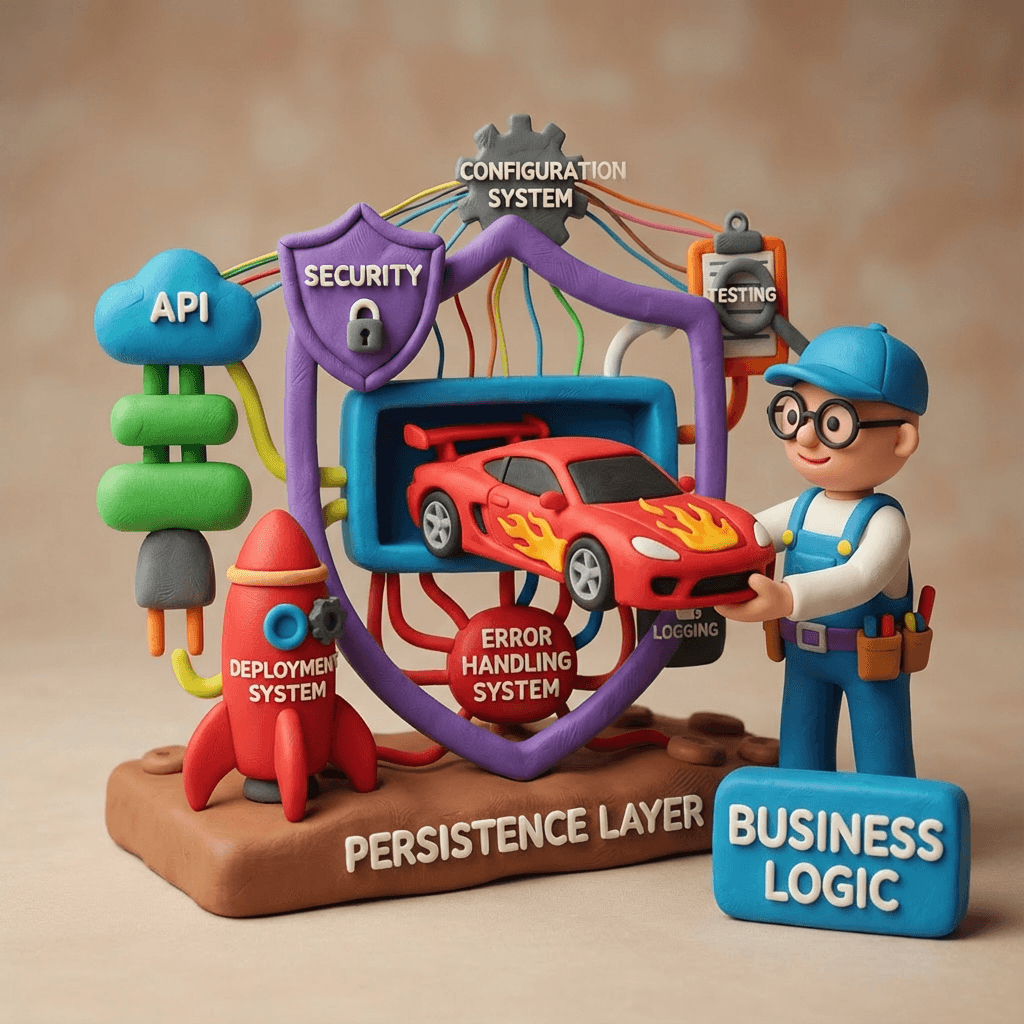
The Vibe Coding Revolution: How AI Agents Are Transforming Software Development
From Autocomplete to Autonomous Development: The Evolution of AI Coding
The Autocomplete Era
Just a few years ago, AI coding assistance meant little more than sophisticated autocomplete. Tools like GitHub Copilot and early versions of TabNine could predict the next line or function you were writing, drawing on patterns learned from millions of code repositories. These were undeniably useful—they saved developers from typing boilerplate code and could suggest common implementations for familiar patterns.
But these tools had fundamental limitations. They operated at the line or function level, lacking any real understanding of your project's architecture. They couldn't reason about how a change in one module would affect another, couldn't plan a multi-file refactoring, and certainly couldn't implement a complete feature that spanned your codebase. They were, in essence, very smart text prediction engines that happened to work well with code.
Traditional AI coding tools suggested individual functions or code snippets based on immediate context, leaving developers to handle integration, testing, and ensuring code follows project conventions. You still needed to be the architect, the planner, the integrator, and the debugger. The AI was merely an assistant that could finish your sentences.
The Agentic Revolution: Understanding Entire Projects
The current generation of AI coding tools—Cursor with its Agent mode, Google's Antigravity, Claude Code, and others—represents a fundamental shift in capability. Agentic coding systems operate at the project level rather than the file level, analyzing relevant context by reading configuration files to understand project setup, examining test files to see existing coverage patterns, and tracing imports to map dependencies between modules.
These tools can now:
- Understand project architecture: They grasp how your modules relate to each other, what your dependencies are, and how changes propagate through the system
- Plan comprehensive implementations: Unlike autocomplete tools that suggest changes within a single file, agentic systems modify multiple related files to maintain consistency—updating route handlers, creating middleware functions, modifying database schemas, adjusting API client code, updating documentation, and adding test coverage across all these changes.
- Execute autonomous workflows: They can work for extended periods, iterating on solutions, running tests, and debugging issues without constant human intervention
- Verify their own work: Through browser automation and test execution, they can validate that their implementations actually work
How Modern AI Coding Tools Use Planning and Todo Lists
The Core Pattern: Plan-Then-Execute
Modern AI coding tools like Cursor, Antigravity, and Claude Code follow a fundamental pattern where agents automatically create todo lists for complex tasks and work through them systematically. This approach represents a significant evolution from simple autocomplete suggestions to autonomous, goal-oriented coding assistance.
Tool-Specific Implementations
Cursor
Cursor introduced Agent Todo Lists in version 1.2, allowing the AI agent to create and manage task lists within the editor that are tied to specific code for contextual clarity. The agent automatically creates todo lists for complex tasks, and for better planning, describing your end goal clearly helps the agent create more accurate task breakdowns.
Google Antigravity
Google Antigravity takes an "agent-first" approach where agents create subtasks from a single prompt, execute them, test the results, and generate comprehensive walkthroughs of the final product. The platform produces "artifacts"—deliverables like task lists, implementation plans, screenshots, and browser recordings—that allow users to verify the agent's logic at a glance.
Antigravity is designed as an agent-first platform that presupposes the AI is not just a tool for writing code but an autonomous actor capable of planning, executing, validating, and iterating on complex engineering tasks with minimal human intervention.
Claude Code
Claude Code uses a TodoWrite tool that creates structured JSON task lists with IDs, content, status, and priority levels, which the UI renders as interactive checklists. The best practice involves explicitly asking Claude to research and plan first before coding, as this significantly improves performance for problems requiring deeper thinking upfront.
Claude Code's architecture maintains a simple agent loop where system reminders are attached to keep agents on track—these are statically generated depending on the tool called and the state of the todo list, which is crucial for agents that take hundreds of steps in one session.
Why Agent Architectures Improve Performance
Research has demonstrated that agent systems incorporating well-defined system prompts, clear leadership and task division, dedicated reasoning/planning-execution-evaluation phases, dynamic team structures, and intelligent message filtering are more effective across a variety of benchmarks and problem types.
Modern agent systems incorporate sophisticated planning modules that decompose complex goals into manageable subgoals, identify dependencies between tasks, and adapt plans as circumstances change. This task decomposition approach enables agents to tackle complex, long-horizon tasks that require coordinated sequences of actions.
The separation of planning from execution provides several benefits:
- Maintains context better over long sessions
- Allows for human review and course correction
- Prevents premature implementation by ensuring requirements are understood first
- Creates transparency into the agent's reasoning process
This architectural approach transforms development from an iterative "write code, run tests, read errors, fix code" cycle into a more efficient "define goal, review plan, approve implementation" workflow—while still maintaining developer control and oversight.
The Human-AI Partnership: Technical Competence Still Required
This doesn't mean software development becomes push-button simple. The revolution these tools enable requires a crucial ingredient: reasonably technically competent humans who can specify what needs to be built.
The most successful use of these tools follows a pattern where humans:
- Articulate clear goals and requirements
- Understand enough about software architecture to review the agent's plans
- Can evaluate whether the proposed implementation makes sense
- Provide course corrections when the agent goes astray
As Anthropic's best practices note, asking agents to research and plan first, explicitly telling them not to code until you've confirmed the plan looks good, significantly improves performance for problems requiring deeper thinking upfront.
The technical competence bar isn't insurmountable—you don't need to be able to implement complex algorithms by hand. But you do need to understand concepts like APIs, databases, state management, and user interfaces well enough to be an effective product owner for your AI development team.
The Coming Revolution in Software Customization
This evolution in AI coding tools promises to fundamentally transform what's possible in software development, particularly around customization.
For decades, software has largely forced users to adapt to what the software does, rather than the other way around. Sure, you get some settings and preferences, maybe a plugin system if you're lucky. But fundamentally, you use the software the way its creators intended. Custom development was expensive, requiring dedicated development teams and ongoing maintenance.
The new generation of agentic AI coding tools changes this equation dramatically:
Democratized Custom Development
Someone with domain expertise and basic technical literacy can now spec out exactly what they want a system to do and have an AI agent build it. The small business owner who knows their workflow inside and out can create custom inventory management that fits their specific needs. The researcher can build data analysis tools tailored to their particular methodology.
Rapid Iteration on Requirements
Don't like how a feature works? Describe what you want changed, and the agent can refactor it. Traditional development required careful upfront planning because changes were expensive. With agentic coding, requirements can evolve more fluidly because modifications are much cheaper.
True Per-User Customization
Imagine software that doesn't just have user preferences but can be fundamentally restructured per user. Different team members could have different workflows implemented in the same tool, each optimized for their specific role and preferences.
Adaptive Systems
Software that continuously adapts to how you actually use it, with agents periodically refactoring and optimizing based on usage patterns. Your tools could literally evolve with you.
The Long Tail of Software Solutions
Many valuable software problems haven't been solved because the market is too small to justify traditional development costs. With AI agents dramatically reducing development costs, we can expect an explosion of specialized tools for niche applications.
The Methodology Revolution
The implications extend beyond what we build to how we build it. The autonomous workflow transforms development from "write code, run tests, read errors, fix code, repeat" into "define goal, review proposed changes, approve implementation."
Development teams can operate at a higher level of abstraction, focusing on:
- Product strategy and user needs
- Architectural decisions and design patterns
- Quality review and validation
- Business logic and domain expertise
The tedious parts—implementing CRUD operations, writing boilerplate, updating related files, fixing type errors, writing tests—increasingly happen automatically.
This suggests a future where the bottleneck in software development shifts from implementation capacity to clear thinking about what should be built. The ability to articulate requirements, understand trade-offs, and make good product decisions becomes more valuable than ever, while pure coding skill becomes less differentiating.
The Vision: Software That Does Exactly What You Want
The ultimate promise of these tools is simple but profound: software that does exactly what you want it to do.
Not software that does approximately what you want, with workarounds for the parts that don't fit. Not software where you have to adapt your workflow because that's how it works. But software that genuinely serves your specific needs, whether you're a team of one or one thousand.
We're still in the early days of this revolution. Current tools have limitations, make mistakes, and require guidance. But the trajectory is clear: software development is shifting from a specialized craft requiring years of training to a collaborative process between humans who know what they want and AI agents that can build it.
The question isn't whether this will happen, but how quickly—and who will be ready to take advantage of it when it does.
Key Takeaways
- AI coding has evolved from simple autocomplete to sophisticated agents that understand entire projects
- Planning and todo lists are central to how modern AI coding tools work, enabling them to tackle complex multi-step tasks
- Different tools take different approaches: Cursor focuses on in-editor integration, Antigravity emphasizes browser-based validation, and Claude Code uses structured JSON task tracking
- Technical competence matters: These tools amplify capability but still require humans who can specify requirements and review plans
- Customization is the future: Dramatically lower development costs promise software that adapts to users rather than forcing users to adapt
- Methodology is changing: Development shifts from implementation focus to strategic thinking about what should be built
The age of truly personalized software—systems that do exactly what you want them to do—is beginning. The tools are here. The question is: are you ready?